78th Festival de Cannes official poster, A man, A woman, Two posters
Two Figures, One Embrace: The Story Behind the Cannes 2025 Official Poster
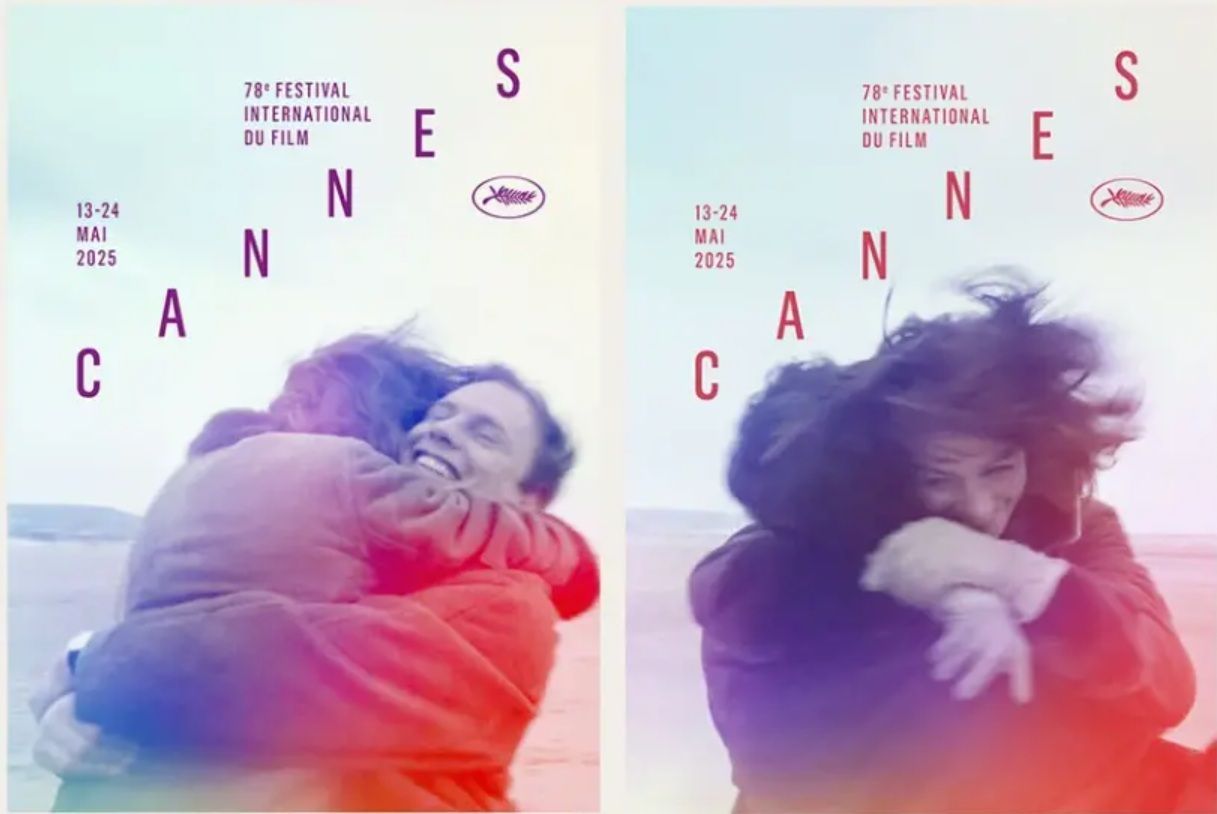
© Les Films 13 – A Man and a Woman, Claude Lelouch (1966) / Graphic design © Hartland Villa
The official poster of the 78th Cannes Film Festival is not just an image—it is a memory, a gesture, and a quiet statement about cinema itself. For 2025, the festival makes an unprecedented choice: a double poster. A man. A woman. Side by side, yet inseparable. Together again.
At first glance, the composition feels simple. A deserted beach. A restless sky. Two figures drawn toward each other. But behind this apparent simplicity lies a moment deeply rooted in film history. The image pays tribute to A Man and a Woman, Claude Lelouch’s 1966 Palme d’Or-winning film, and in particular to the iconic embrace between its stars, Anouk Aimée and Jean-Louis Trintignant. A scene that lasts only seconds, yet has endured for decades.
It is striking how such a brief cinematic moment—a 20-second sequence born from a three-month idea and a three-week shoot—can achieve a sense of permanence. The poster reflects that paradox: cinema as something fleeting, yet capable of capturing eternity. The embrace, often considered one of the most memorable in film history, becomes the visual and emotional core of this year’s festival identity.
For the first time, Cannes presents two official posters instead of one, reinforcing the idea that these two figures cannot be separated. Their connection transcends the frame, echoing the festival’s broader message in a time often marked by division. The intention is clear: to reunite rather than divide, to bring bodies and emotions closer, and to celebrate movement, freedom, and human connection.
The choice also carries a note of tribute. Both Anouk Aimée and Jean-Louis Trintignant, who were honored at Cannes during their careers, are no longer with us. These posters serve as a homage to their legacy—two performers whose presence continues to resonate through cinema. Their embrace, captured in vivid color, becomes a symbol of love that persists despite uncertainty, a quiet defiance against the darker tones of the present.
There is also a subtle dialogue embedded in the concept, drawn from the film itself—questioning why cinema is often dismissed when it reflects life so closely. The poster seems to answer without words: because film, at its best, distills emotion into something pure, something lasting.
In the end, the 2025 Cannes poster does not rely on spectacle. Instead, it returns to the essence of cinema—a man, a woman, and a moment suspended in time. A reminder that even the shortest scenes can leave the deepest marks, and that, sometimes, eternity can be found in a single embrace.
Stefania Veneri